Innovative Technologies and Contents
▍Innovative Development Strategy Framework
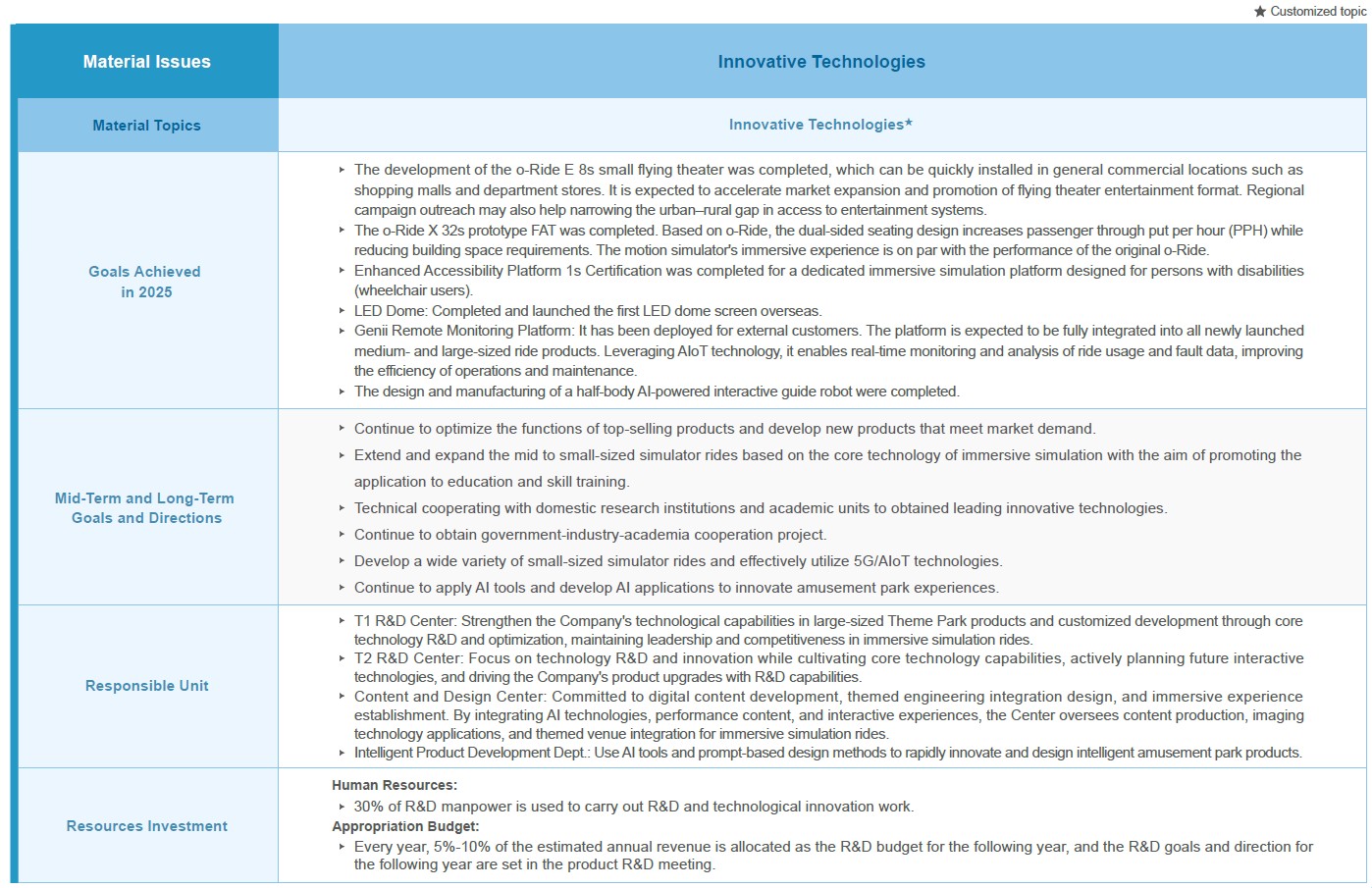
Compared with traditional mechanical equipment, such as roller coasters, immersive experiences are less likely to cause physical injury and social burden due to the pursuit of excitement. Brogent uses immersive simulation technology to create a variety of products that integrate software and hardware, and aims to develop products that improve human life. It is also expected to be able to solve and improve human health and safety problems through the innovative application of immersive simulation technology. Achieving higher social responsibility with years of immersive simulation technological achievement is the original intention of Brogent's continuous technology innovation.Brogent's R&D team needs to continuously engage in innovation and development, and combine technology and diverse applications to launch products that meet market needs. Therefore, the key to designing products that are both entertaining and safe is to let experts in mechanics, electrical control, and audiovisual simulation to work closely together, understanding market demand to maximize revenue for customers.
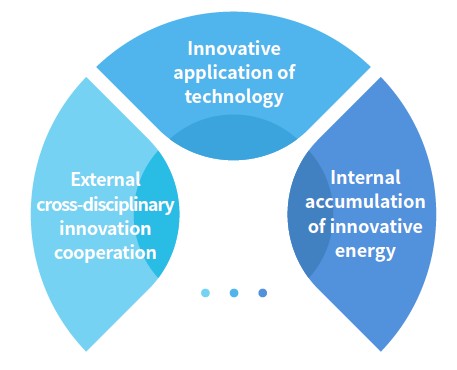
♦ Innovative Application of Technology
Brogent continues to promote innovative transformation in its R&D and content production processes, introducing artificial intelligence (AI) and digital tools to strengthen cross-departmental collaboration mechanisms while reducing resource consumption and unnecessary environmental burdens through efficiency improvements.
► The production of digital content requires a large amount of render computing. The Company has optimized processes to shorten rendering time, thereby reducing server workload, electricity consumption, and hardware replacement frequency. This approach not only improves the ability to control the progress of projects, but also reduces environmental impacts associated with electronic equipment and energy use, aligning with the Company's low-carbon operations direction.
► Leveraging AI 4K-to-8K ultra-resolution technology, existing aerial footage and video materials can be upgraded and reused, avoiding the need for reshooting, thereby reducing labor, transportation, and energy inputs. This not only improves the quality of content, but also effectively reduces carbon emissions and environmental burdens during the manufacturing stage, allowing image assets to extend their life cycle and improve usage efficiency.
► The adoption of game engines and real-time drawing accelerates CGI animation production and increases digital asset reusability, enabling greater speed and flexibility in content development. This method also reduces the heavy hardware loads and energy demands arising from large-scale rendering while lowering overall energy consumption and freeing human resources from repetitive rendering tasks, enabling greater focus on high-value creative and technological innovation.
► Generative AI drawing technology is applied in early-stage planning and themed design development to rapidly produce diverse visual styles and concept drafts. This shortens the design decision-making process and reduces material and manpower consumption caused by repeated trials. This technology not only improves creative production efficiency, but also enhances content diversity and cultural extensibility, thereby improving the overall quality of immersive experiences.
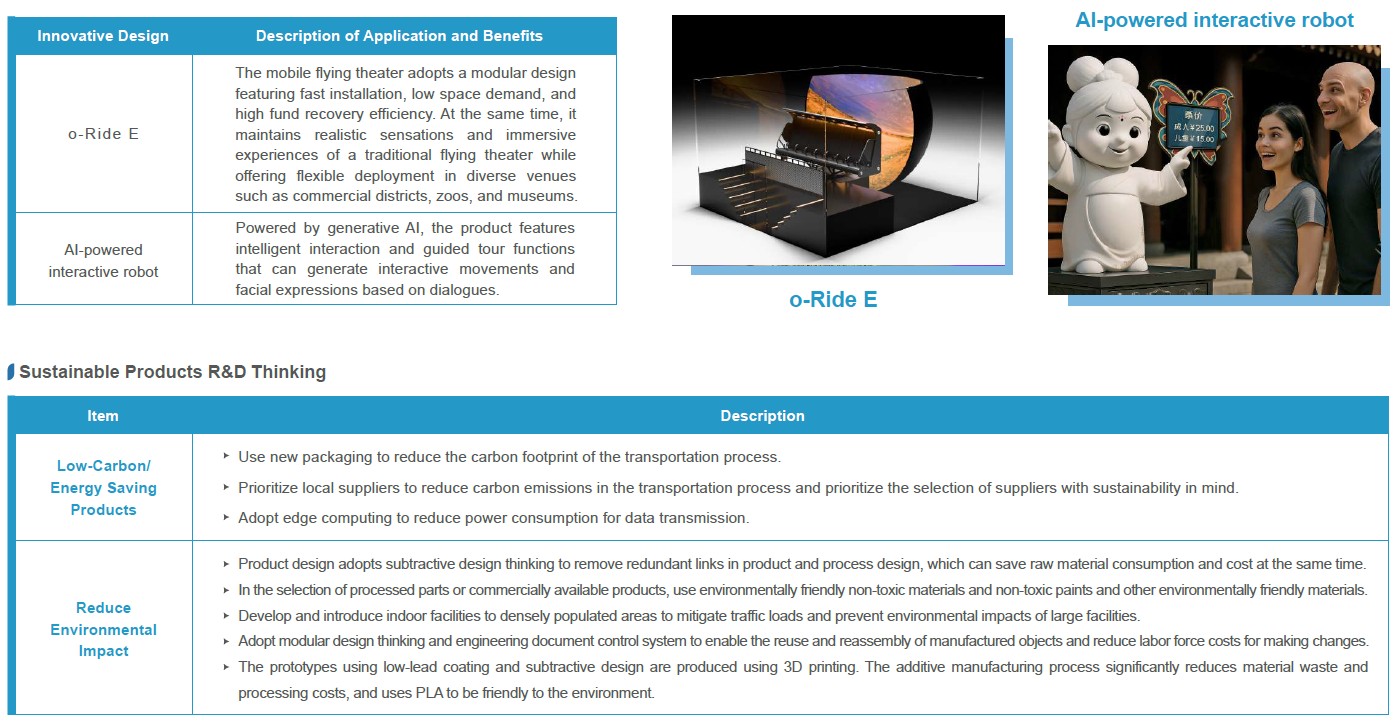
► The generative AI-powered guide robot features voice recognition, dynamic response, and facial expression generation capabilities. It can adjust interactive behaviors in real time based on user conversations, making immersive experiences smarter and more vivid. This technology not only improves service quality, but also reduces the demand for manual work, thereby enhancing digital environment safety and operational efficiency.
► In ride mechanical design, the Company has introduced AI for material analysis and structural configuration recommendations, thereby improving design accuracy, reducing the number of trials, and lowering the use of raw materials. This application allows products to take into account performance, safety, and resource efficiency at the R&D stage, shortening R&D timelines and reducing overall manufacturing-related environmental impacts.
♦ Internal accumulation of innovative energy
1. Education, Training and Professional Development
Brogent is committed to strengthening the professional skills and cross-disciplinary capabilities of its employees. Through a multi-level education and training mechanism, it enhances the competitiveness of the team and ensures that product development and manufacturing meet international standards, ensures that talent training and development meet ESG goals, and supports corporate sustainable operations and innovative development. The training programs are designed to include core professional training, cross-disciplinary integration training, and departmental technical exchange.
2. Internal Control System Optimization
In order to enhance the efficiency of R&D and project execution, the Company continues to strengthen its internal control system and establish an efficient decision-making and feedback mechanism, including:
► Redefine the division of labor according to the needs of different business situations to enhance organizational flexibility and optimize resource allocation.
♦ External cross-disciplinary innovation cooperation
The cross-disciplinary collaboration to enhance the effectiveness of Brogent's R&D includes the following areas:
► We periodically send R&D personnel to participate in immersive simulation technology related seminars or exhibitions, and visit the latest immersive simulation facilities that are opened.

▍Innovation and R&D Management
Brogent's R&D technology team is formed by the T1 R&D Center, T2 R&D Center, Content and Design Center and Intelligent Product Development Dept., and aims to make more innovative breakthroughs in the immersive simulation technology industry. Brogent regularly plans training and participation in seminars for the R&D team every year to ensure that it is up-to-date on cutting-edge simulation technology issues, trends, and technologies around the world. Moreover, we collaborate with domestic and international organizations to improve our expertise in product development and industrial competitiveness.
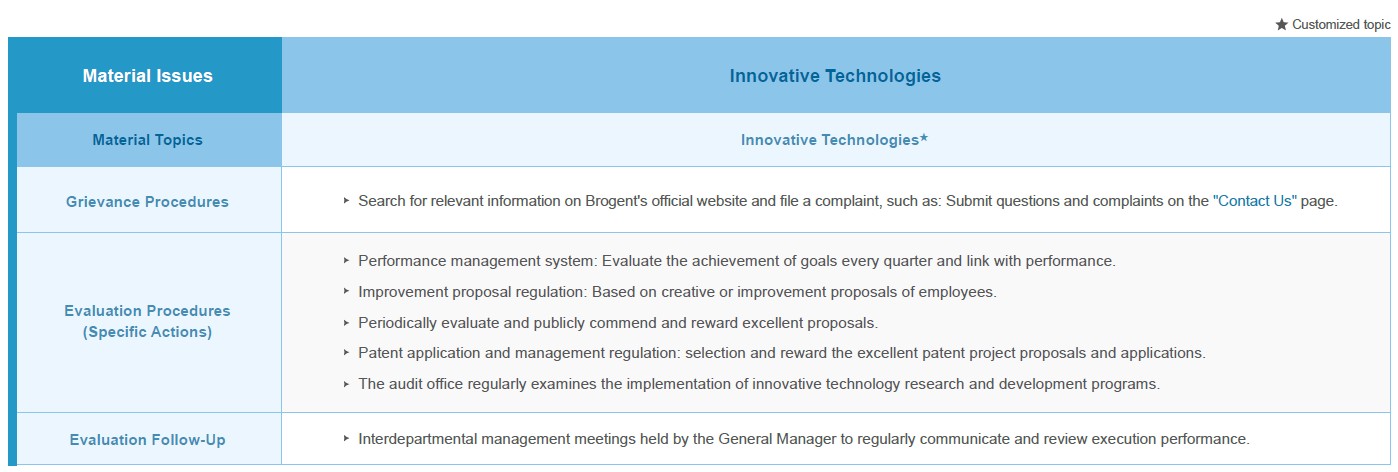
We base our innovation and R&D on project R&D and creative proposals put forward by our employees. A product development database has been built based on the R&D results. We communicate with colleagues across departments on a monthly basis to learn about market and customer demand. After internal discussions and brainstorming, we propose corresponding R&D projects based on the R&D Management Regulations and annual strategies and targets and set up a team for implementation. The departments also encourage employees to share new knowledge about the Company's products through the internal training system to inspire great ideas.
Employees can propose new ideas for products or technology research and development based on the creative proposal management regulations in accordance with the Company's R&D management and annual strategies. After internal review and discussion, they shall be reported to the Company for resource allocation and budgeting for implementation.

♦ Stakeholder Participation and Feedback System

▍Innovative Design Applications
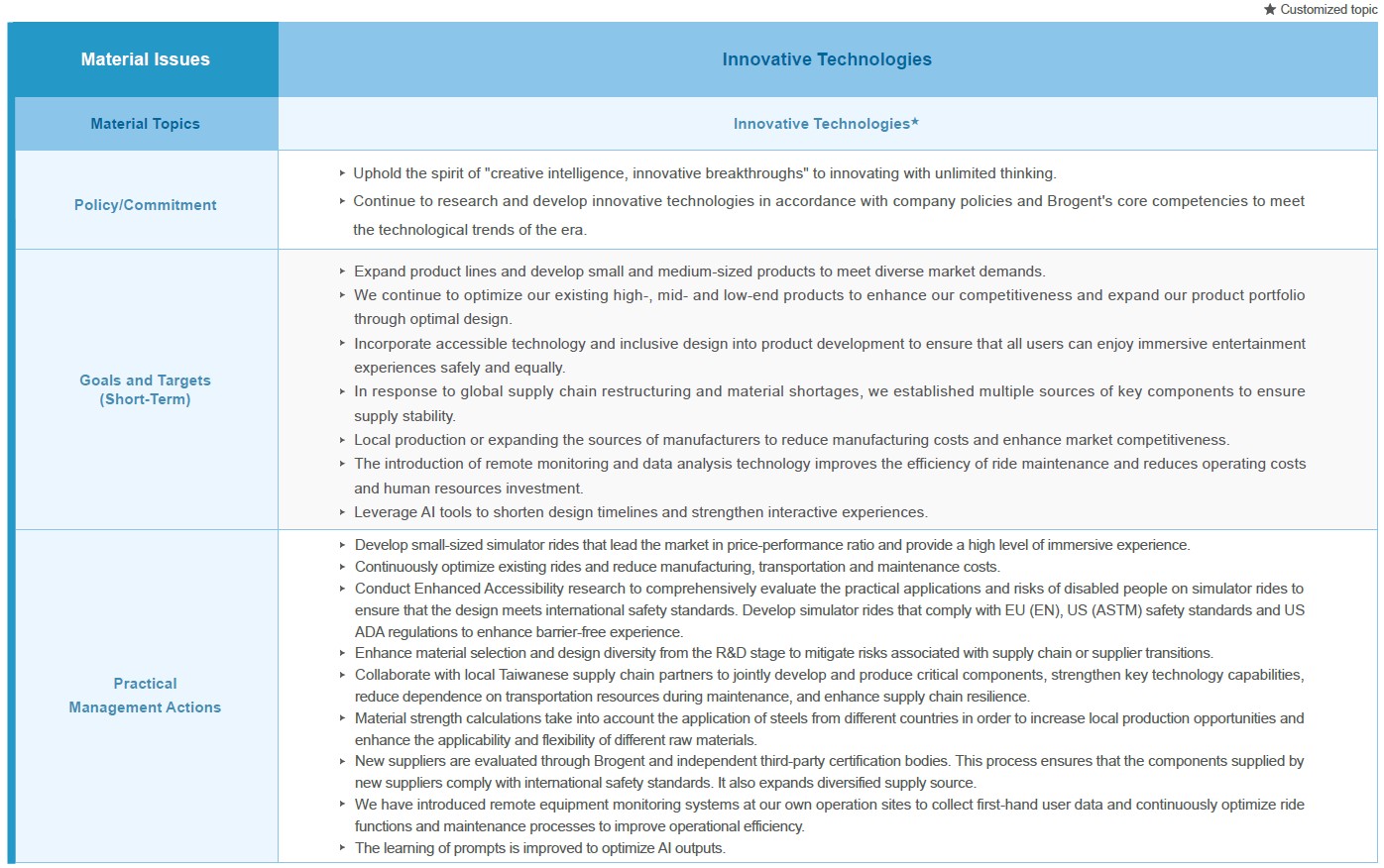
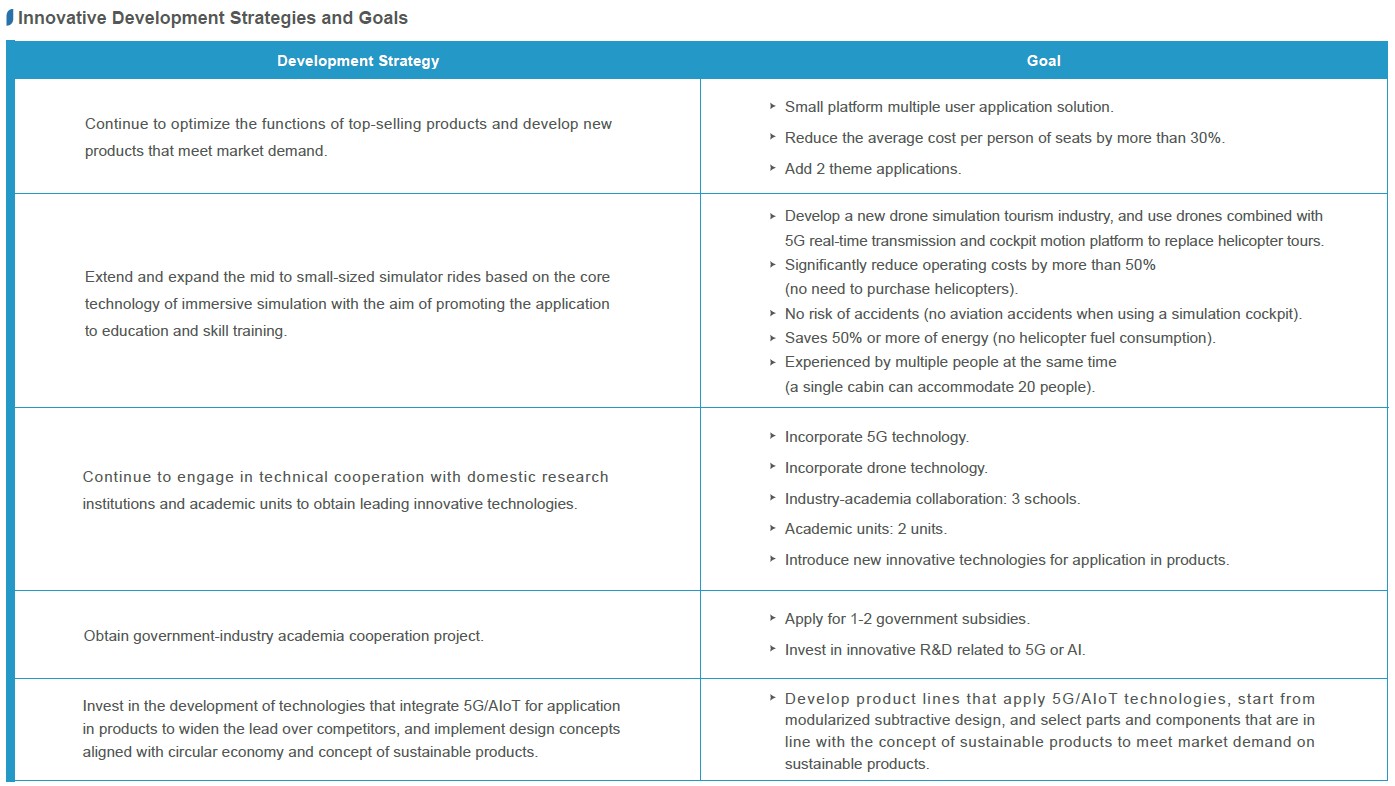
Brogent adheres to the core philosophy of "creativeness" and encourages employees to incorporate innovative and sustainable design concepts when developing products. We combine our core technologies with new immersive simulation technologies to design a variety of innovative energy-efficient simulator rides with low carbon emissions.
▍Industry-Government-Academia Research Collaboration
Brogent not only periodically sends R&D personnel to participate in immersive simulation technology related seminars and exhibitions, and visit the latest immersive simulation rides to actively connect its own company with the world, but also commissions academics to assist in academic and theoretical researches, and if there are any results, they will be transferred into commercial product development.
♦ Development of key Technologies for Unmanned Aerial Vehicles (UAVs)
To strengthen R&D capabilities, the Company has engaged in industry–academia collaboration with the Metal Industries Research & Development Centre (MIRDC) to invest in the development of UAV patrol and autonomous flight technologies. The partnership includes long-range UAV airframe design, research and development of corrosion-resistant materials, improvement of endurance and wind resistance performance, and integration of diverse positioning technologies such as GPS, RTK, and UWB for high-precision aerial positioning, strengthening the operational reliability of UAVs across various environments. In addition, we have also jointly developed panoramic camera gimbals, 5G low-latency image streaming, depth vision, and LIDAR-based obstacle avoidance technologies, enabling UAVs deliver higher-quality and real-time imaging and sensing information for patrol, monitoring, and smart tourism applications. Through industry-academia collaboration, the Company effectively introduces scientific resources and accelerates the implementation of technologies, strengthens cross-disciplinary integration capabilities, and continues to promote the development of smart equipment, low-carbon technologies, and sustainable innovation.
▍R&D Achievements
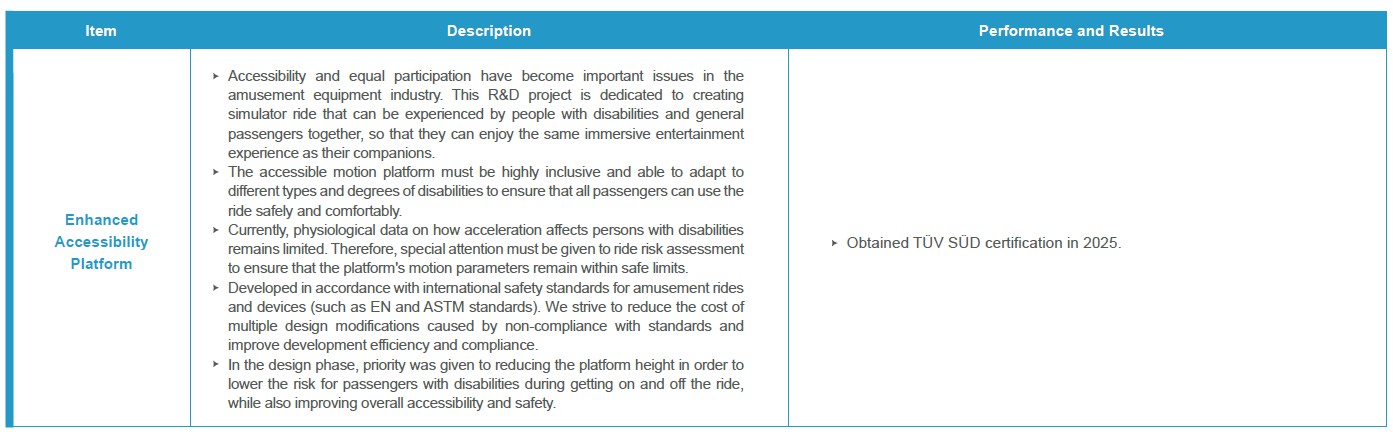
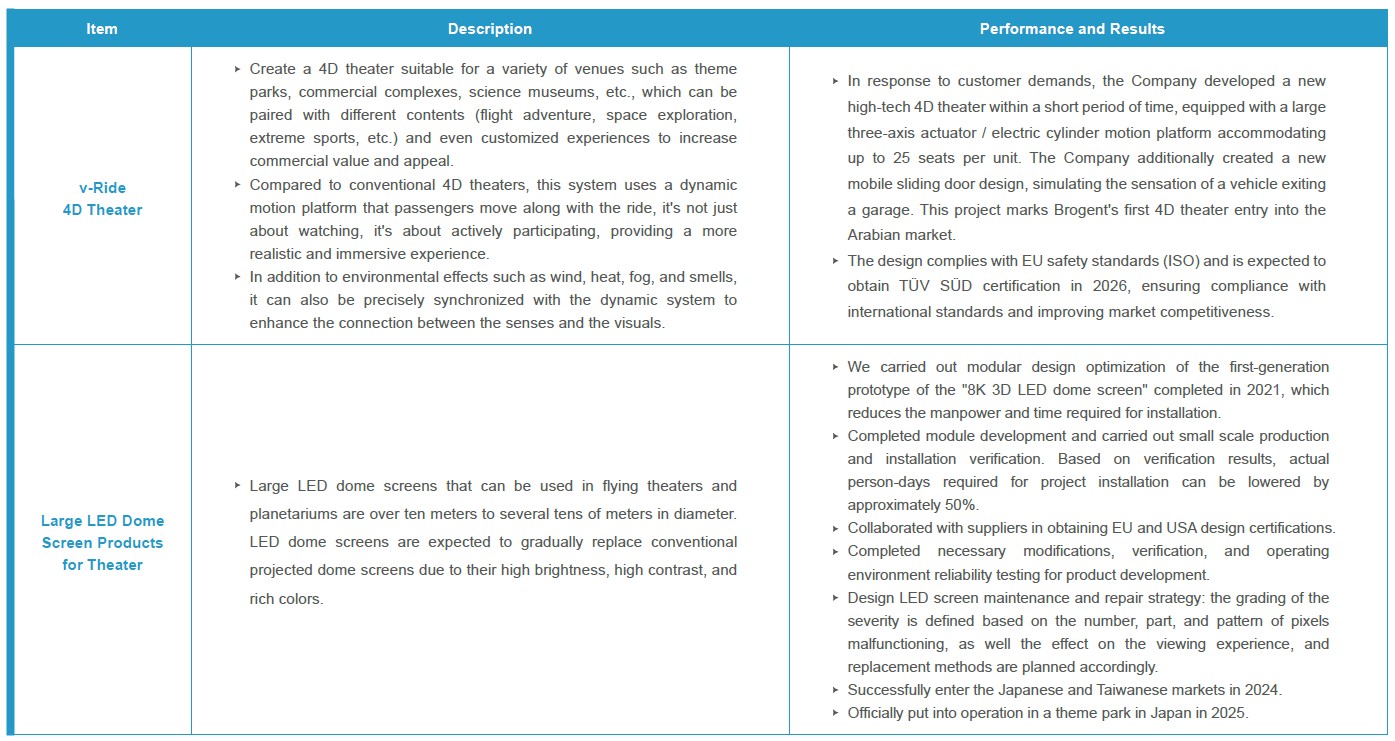
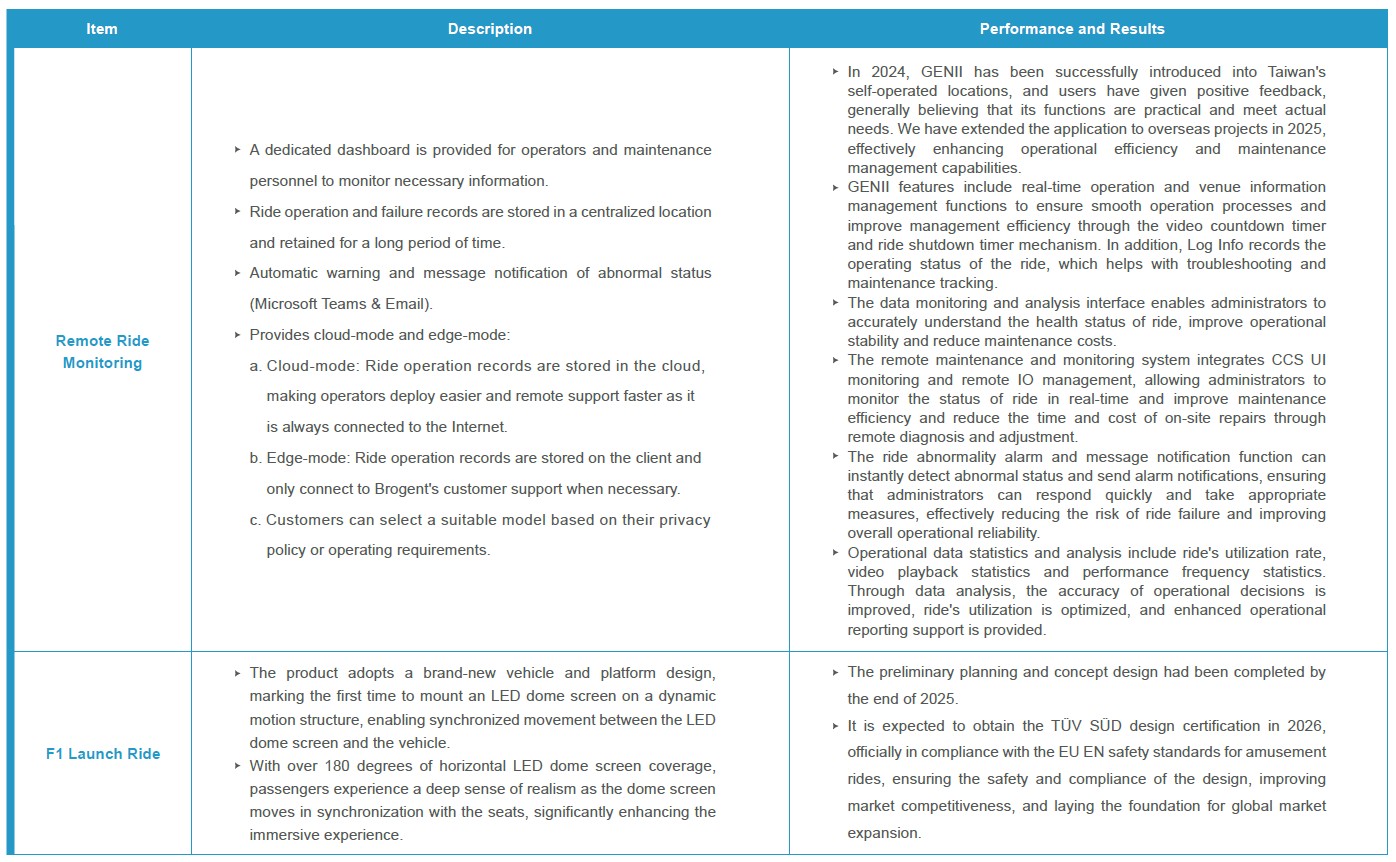
Brogent has always spared no effort in R&D, continues to conduct R&D of forward-looking technologies and innovative applications, and implements product design research and systematic management to maintain the leadership of its products and technologies. In 2025, there were 127 R&D personnel, and R&D expenses totaled NT$210,394 thousand, accounting for 17% of the annual revenue that year.