Sustainable Supply Chain
Brogent's simulator rides are developed via the synchronized integration of multiple systems and high-end technologies. To manufacture stable and safe products, mechanical manufacturing, electrical control, audiovisual system, and safety certification system in the upstream industry chain must be integrated to successfully create various new-generation entertainment facilities with the latest form of media.
Brogent has established complete supply chain management regulations and measures, including supplier management principles, new supplier review system, and supplier risk classification, and supplier management (including evaluation and consultation). In addition, Brogent focuses on issues of quality and safety, endeavoring to optimize the supplier cooperation models, guide suppliers to grow together, work together to improve immersive simulation technology, and fulfill CSR to achieve sustainable operations.
To implement local procurement in the supply chain and attain the goal of sustainable operation, considering the relatively high percentage of overseas projects in recent years, the Company has incorporated environmental and social aspects into the procurement decision-making process since 2024. For large-scale steel structures and equipment with significant volume or weight, the Company prioritizes localized production or procurement near project sites to reduce carbon emissions and energy consumption associated with cross-border transportation. In 2024, we developed 11 local suppliers for overseas projects, with an additional 5 new suppliers added in 2025. In addition, for domestic upstream and downstream transportation of goods, priority is given to the use of existing logistics resources such as backhaul transportation for distribution to improve transportation efficiency, reduce empty vehicle mileage, thereby decreasing energy consumption and transportation-related carbon emissions.
▍Supply Chain Management
Brogent has established complete supply chain management regulations and measures, including supplier management principles, new supplier review system, and supplier risk classification, and supplier management (including evaluation and consultation). In addition, Brogent focuses on issues of quality and safety, endeavoring to optimize the supplier cooperation models, guide suppliers to grow together, work together to improve immersive simulation technology, and fulfill CSR to achieve sustainable operations.
To implement local procurement in the supply chain and attain the goal of sustainable operation, considering the relatively high percentage of overseas projects in recent years, the Company has incorporated environmental and social aspects into the procurement decision-making process since 2024. For large-scale steel structures and equipment with significant volume or weight, the Company prioritizes localized production or procurement near project sites to reduce carbon emissions and energy consumption associated with cross-border transportation. In 2024, we developed 11 local suppliers for overseas projects, with an additional 5 new suppliers added in 2025. In addition, for domestic upstream and downstream transportation of goods, priority is given to the use of existing logistics resources such as backhaul transportation for distribution to improve transportation efficiency, reduce empty vehicle mileage, thereby decreasing energy consumption and transportation-related carbon emissions.
▍Supply Chain Management
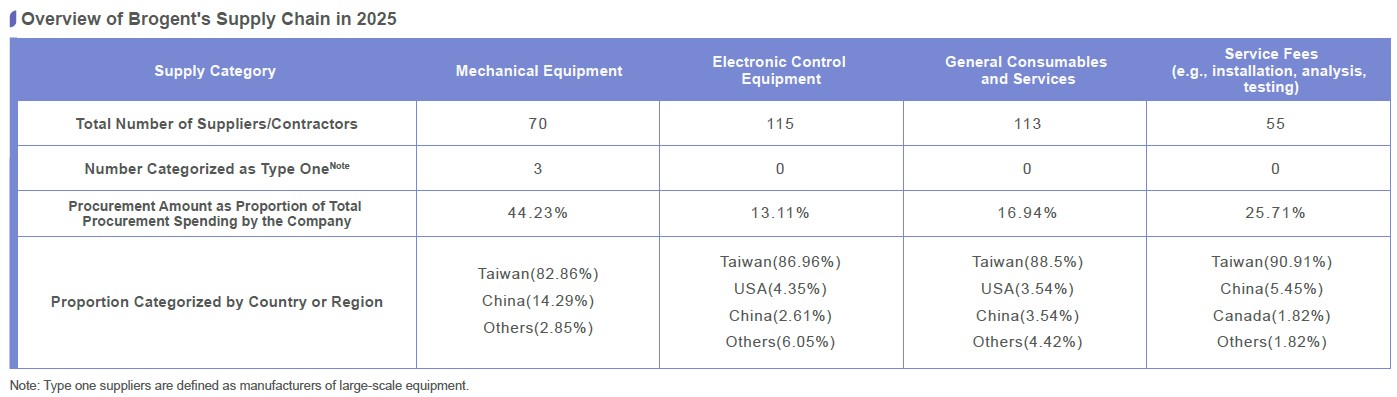
► In 2025, there are 353 transaction suppliers, with Taiwan as the main operating base, accounting for 87.25% of the local procurement amount and 12.75% of the procurement amount from other countries.
► There are currently 1,279 suppliers, in which 75 were added in 2025.
▍Supplier Management Principles
Brogent chooses qualified suppliers and sets Quality, Schedule, and Cost as the three primary factors of the management principles to ensure a steady supply of materials and high-quality engineering. In order to jointly pursue sustainable business operation and growth, we create a win-win sustainable supply chain. Environmental certification or labels are one of the evaluation metrics included in our sustainable supply chain evaluation of suppliers. Suppliers who have obtained these labels would be given preference for being selected. Between suppliers who can provide the same services, priority would be given to suppliers located closer to us, reducing the distance which our employees have to travel and the amount of air pollution generated by product shipping.。
▍Supplier Risk Management
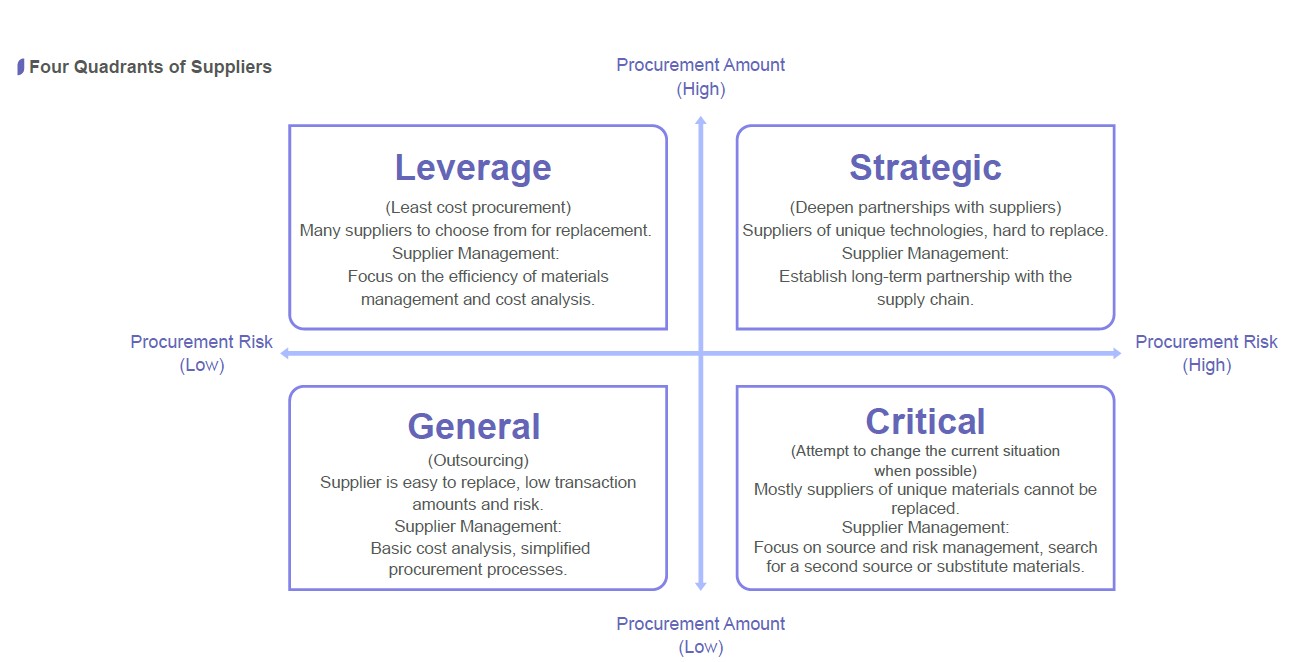
Brogent's suppliers are divided into two categories: general materials and outsourced projects. As of the end of 2025, Brogent had a total of 1,279 suppliers. According to the risk analysis of the purchase management procedure, as well as purchase risks and purchase prices identified in the management procedure, Brogent classifies suppliers into four risk quadrants and applies different management methods accordingly.
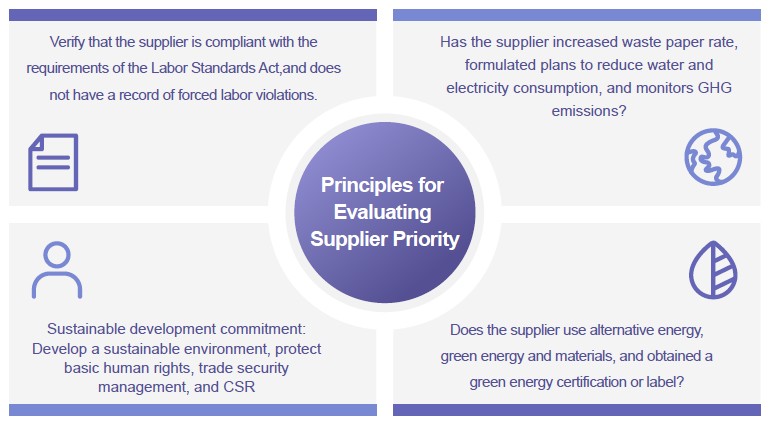
In addition, in accordance with the principles for evaluating supplier priority, the risk of forced and compulsory labor incidents occurring in the cooperative suppliers of all Brogent's operating locations is quite low.
▍Supplier Cooperation Regulations
Brogent's assessment of new suppliers includes a preliminary review process that considers capital, operating conditions, production capacity, and performance. We then determine whether to conduct an on-site inspection and assessment based on the situation. When cooperating with new suppliers, we sign a purchase contract or purchase order based on the situation, and require the supplier to agree to abide by Brogent's sustainable development requirements, including protecting human rights, not using child labor, and prohibiting discrimination and unfair treatment in employment, salaries, and promotions. Suppliers are required to comply with local labor safety and health regulations and provide a safe and healthy working environment.
▍Supplier Evaluation
Supplier Evaluation and Screening Principles
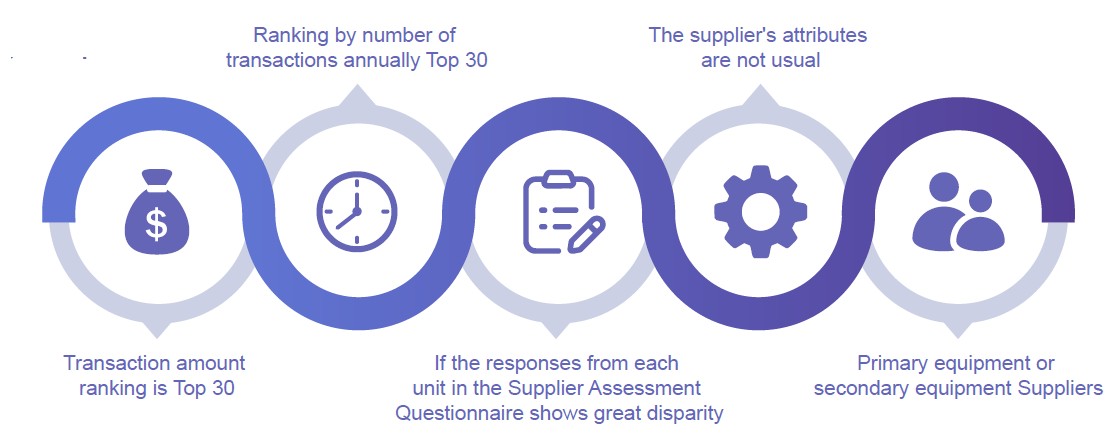
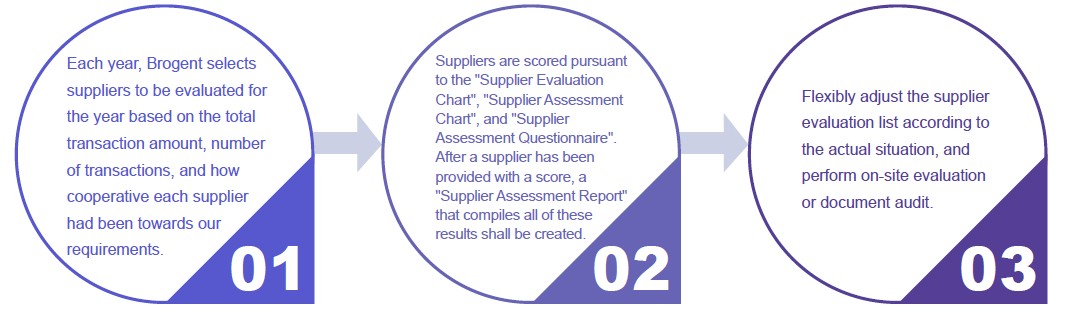
Supplier Evaluation Process
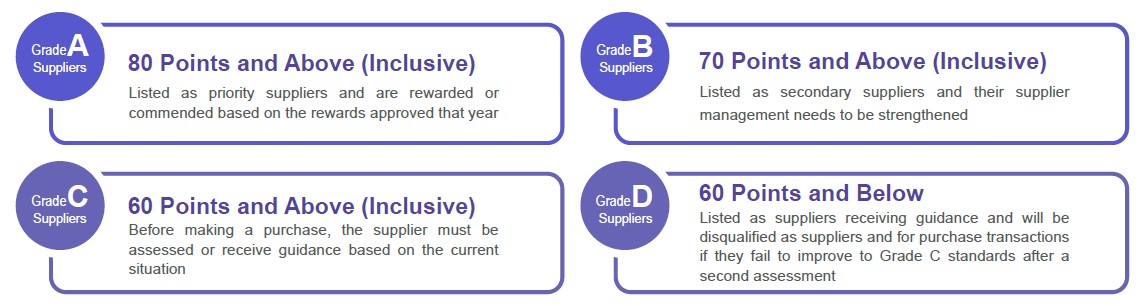
Explanation of Supplier Assessment Grades
ESG Requirements for Supplier Evaluation
Brogent conducts supplier evaluations every year. The evaluation covers basic information verification and product quality control procedures (including incoming quality control, manufacturing phase, finished product inspection, storage and packaging), quality management systems, environmental safety, supplier management, employee training, and green energy management. Since 2024, Brogent has incorporated human rights–related ESG criteria into the Supplier Assessment Questionnaire. The assessment scope includes diversity and inclusion, healthy workplace, reasonable working hours, respect for employees, labor-management communication, employee training, and privacy protection. These measures ensure that business partners comply with fundamental human rights standards and respect employee working conditions and welfare. Through these mechanisms, the Company enhances ethical standards across the supply chain and reinforces its commitment to social responsibility.
Supplier Assessment Grades and Results in 2025
We use two methods for supplier evaluation: electronic questionnaire and annual evaluation. After deliveries are accepted during weekdays, the suppliers are randomly selected to fill out an electronic questionnaire. In 2025, electronic questionnaires covered approximately 13.6% of trading suppliers, achieving a 100% response rate. The 2025 annual ratings were selected based on 2025 transaction data. A total of 5 companies were selected, in which 4 were graded A and 1 was graded B, with an average score of 81.99.
▍Supply Chain Strategy for Upgrading Old Suppliers and Cultivating New Suppliers
For the upgrading of old suppliers, we take the approach of cooperating with them starting from small cases and counseling them to meet Brogent's requirements in terms of quality, and then gradually undertake large-scale cases; on the other hand, for those suppliers with good qualifications, we will counsel them to obtain internationally recognized qualifications, so as to enable them to undertake cases in various countries. For new supplier cultivation, we have formulated a comprehensive development SOP process to ensure that new partners can be quickly integrated into our supply chain system in all aspects. The aforementioned strategies not only help to enhance the overall capacity and competitiveness of our suppliers, but also help to promote the long-term stable development of our enterprise.
In terms of proven achievements in 2025, we successfully mentored a supplier that previously only held GB (China) welding certification to obtain EN welding certification, enabling the supplier to undertake simulator rides projects in Europe and the United States. In addition, we assisted another supplier that possessed related welding qualifications but lacked experience in the manufacturing of large-sized simulator rides. Through an R&D project–based collaboration, we supported the supplier in conducting pilot run and the supplier has now acquired the capability to undertake large-sized simulator rides projects.